Smart Scan Orthodontics!

Arvind Singh
| 08-05-2026
 · News team
Orthodontics is entering a new technological phase driven by digital scanning systems, artificial intelligence, and three-dimensional imaging. Traditional impression materials that once created discomfort and delayed laboratory work are rapidly being replaced by highly detailed digital models captured in minutes.
This transformation is not simply a cosmetic upgrade. Digital scanning now influences diagnosis, appliance design, monitoring, communication, and long-term treatment precision.
Modern clinics increasingly rely on intraoral scanners capable of generating exact virtual replicas of dental structures with remarkable detail. These systems support customized aligners, robotic wire fabrication, predictive simulations, and remote progress evaluation. The result is a faster and more accurate workflow that reduces unnecessary adjustments while improving consistency throughout treatment.
Precision Through Real-Time Three-Dimensional Imaging
One of the most significant advantages of digital scanning lies in measurement accuracy. Conventional impressions often faced distortion caused by material shrinkage, air bubbles, or handling errors during transport. Digital systems remove many of these limitations by capturing thousands of images each second and merging them into a single three-dimensional model.
This level of precision allows orthodontists to identify spacing irregularities, rotation patterns, and bite relationships with far greater clarity. Detailed imaging also improves appliance manufacturing because aligners and brackets can be designed specifically for each patient rather than relying on generalized templates.
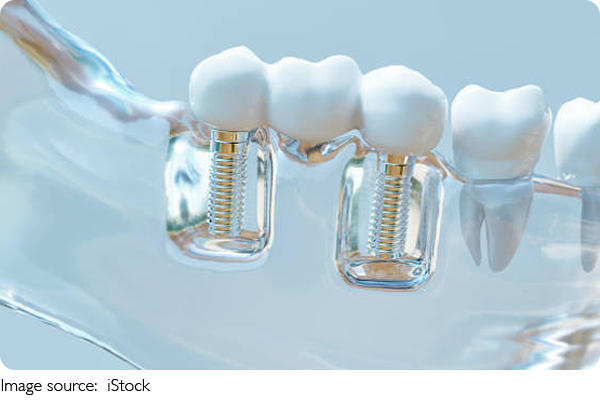
Digital scans also improve long-term record management. Instead of storing fragile plaster casts, clinics maintain encrypted digital archives that can be reviewed instantly during future appointments. This capability strengthens continuity across every stage of care.
Faster Treatment Planning and Appliance Production
Digital scanning has dramatically shortened the timeline between consultation and treatment initiation. Earlier methods often required shipping physical impressions to laboratories, increasing delays and creating opportunities for damage during transport. Digital files now move electronically within seconds.
Once the scan is completed, specialized software evaluates alignment conditions and generates treatment simulations. Orthodontists can modify tooth movement sequences digitally before any appliance is manufactured. This predictive capability improves efficiency because potential complications may be detected before active treatment begins.
Three-dimensional printing has strengthened this process even further. Customized aligners, retainers, and indirect bonding trays can now be fabricated with exceptional consistency. Since every appliance is based on precise digital mapping, fit quality becomes significantly more reliable.
Artificial Intelligence and Predictive Monitoring
Artificial intelligence is becoming an important companion within digital orthodontics. Advanced software can analyze scan data, compare progress against projected movement patterns, and identify inconsistencies earlier than traditional observation alone.
Machine learning systems are also improving landmark recognition and segmentation accuracy in three-dimensional scans. Studies involving deep learning models have demonstrated strong performance in identifying tooth landmarks and alignment features automatically, reducing manual workload while improving consistency.
Remote monitoring represents another major development. Digital scans and smartphone imaging allow progress evaluation between clinic visits. Orthodontists can determine whether treatment is advancing correctly without requiring unnecessary appointments. This approach improves efficiency for both clinics and patients while maintaining close supervision.
Dr. Ramón Mompell, a clinical speaker for Align Technology, highlights that the absence of digital tools in a modern practice significantly limits a clinician's ability to refine and adapt patient care. He suggests that digital integration is no longer optional, but essential for maintaining control over treatment adjustments.
Improved Communication and Patient Understanding
Digital scanning has also changed communication inside orthodontic consultations. Three-dimensional visualizations provide immediate demonstrations of alignment conditions and projected outcomes. Instead of relying entirely on technical explanations, specialists can display virtual simulations directly on-screen.
This visual approach improves understanding because patients can observe expected movement stages before treatment begins. Confidence often increases when projected results become easier to visualize.
Educational communication also benefits from digital comparison tools. Sequential scans captured throughout treatment can reveal progress with exceptional clarity. Minor changes that may appear difficult to notice in a mirror become highly visible through layered digital analysis.
Beyond communication, digital systems contribute to comfort. Scanning devices eliminate many unpleasant experiences associated with impression trays and thick molding material. Faster capture times also reduce fatigue during appointments.
The Future Direction of Digital Orthodontics
The next stage of orthodontics will likely combine digital scanning with advanced artificial intelligence, cloud-based collaboration, and increasingly personalized appliance production. Researchers are already developing systems capable of reconstructing highly detailed three-dimensional dental images from limited photographic input, expanding opportunities for remote consultation and telemonitoring.
Future software may eventually simulate treatment outcomes with even greater biological and mechanical accuracy. Real-time analytics could assist orthodontists in adjusting force systems immediately when movement patterns deviate from expectations.
Despite rapid automation, clinical expertise remains essential. Technology strengthens professional judgment rather than replacing it. Digital systems provide data, visualization, and predictive support, while experienced specialists continue directing treatment strategy and decision-making.
Digital scanning has transformed orthodontics from a largely manual discipline into a highly data-driven field focused on precision, efficiency, and customization. Orthodontics is no longer defined only by mechanical adjustment techniques; it is increasingly guided by intelligent digital ecosystems designed to improve clinical quality and patient experience simultaneously.