The Future of Exosuits

Amina Hassan
| 16-07-2026
 · News team
Modern engineering continues to transform the relationship between human capability and mechanical support.
Among the most advanced innovations is the exoskeleton suit, a wearable system designed to assist physical movement through external mechanical structures and intelligent control technologies.
Rather than replacing natural motion, exoskeleton technology is designed to enhance strength, endurance, stability, and movement efficiency during specific tasks. Its development combines progress in robotics, sensor systems, and biomechanical engineering, creating a connection between human intention and precise mechanical assistance.
Core Function: Mechanical Support and Motion Assistance
An exoskeleton suit functions as an external framework that follows the body’s natural movement patterns. Its primary purpose is to support activities such as lifting, walking, and repetitive physical actions by reducing physical strain on muscles and joints. Mechanical actuators positioned near key movement points provide controlled assistance, helping users perform motions with improved stability and efficiency.
“Exoskeletons and orthoses are defined as mechanical devices that are essentially anthropomorphic in nature, are ‘worn’ by an operator and fit closely to the body, and work in concert with the operator’s movements.” — Hugh Herr, Journal of NeuroEngineering and Rehabilitation.
These systems are designed to respond in real time, translating movement intentions into mechanical support with minimal delay. This coordination helps improve balance, maintain smoother motion, and support endurance during extended activities. Unlike traditional support devices, modern exoskeleton systems can adapt dynamically by adjusting assistance levels based on movement intensity and individual user requirements.
Sensor Systems and Intelligent Feedback Control
A central element of exoskeleton technology is its network of sensors that monitor movement, posture, pressure, and applied force. These sensors continuously collect information and transmit data to a processing system that determines the appropriate level of mechanical support.
This feedback process allows the exoskeleton to provide accurate and responsive assistance. When a user begins walking or lifting an object, the system can evaluate movement speed, body position, and force distribution before activating support mechanisms.
Advanced designs also incorporate predictive control methods that identify repeated movement patterns. This improves coordination between the user and the device, creating smoother and more natural interactions.
Power Systems and Energy Management
Exoskeleton suits rely on compact energy systems to operate motors, sensors, and control components. Battery performance plays an important role in determining operating duration while maintaining comfort and mobility.
Engineers continue to improve energy efficiency through lighter power systems, improved energy management, and more effective designs. Some developing concepts explore methods for recovering small amounts of energy during specific movements to improve overall efficiency.
Balancing power capacity, weight, and comfort remains an important engineering challenge. A lightweight design is essential for allowing natural movement while providing effective mechanical assistance.
Structural Design and Human Alignment
The mechanical structure of an exoskeleton is carefully designed to match the body’s natural movement pathways. Joint mechanisms and support components are positioned to follow human motion patterns, allowing better coordination between the user and the device.
Many systems use lightweight materials and durable composite structures to provide strength while maintaining flexibility. The design must balance stability, mobility, and long-term comfort to support practical use in different environments.
Proper alignment is essential because incorrect positioning can interfere with natural movement patterns. Precision engineering ensures that assistance supports the user while maintaining normal biomechanics.
Practical Applications Across Industries
Exoskeleton technology is being developed for environments where physical assistance and improved movement support are valuable. In industrial settings, these systems can assist with repetitive tasks and help reduce physical strain during demanding activities.
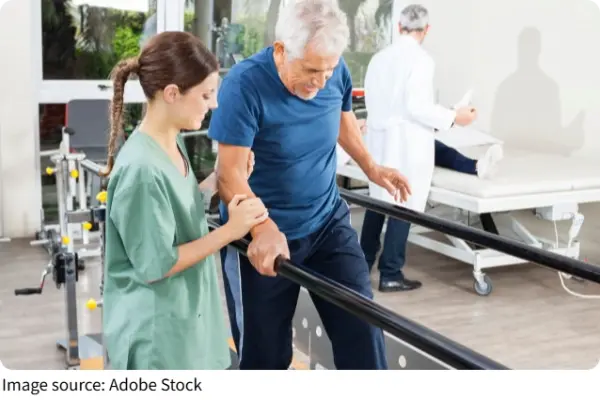
In rehabilitation environments, exoskeletons can provide controlled movement assistance during structured recovery programs. By guiding motion consistently, these systems allow progress to be monitored and adjusted according to individual needs.
Beyond these applications, ongoing research continues to expand the potential of wearable robotic systems in areas requiring improved endurance, mobility, and physical support.
Future Development and Technological Expansion
Future advancements in exoskeleton technology focus on improving adaptability, reducing weight, and creating more intelligent control systems. Artificial intelligence and advanced computing methods may further improve how devices predict movement and respond to user intentions.
Researchers are also exploring flexible materials, improved energy solutions, and more compact designs to create systems that feel more natural and comfortable during use.
As engineering continues to advance, exoskeleton suits are expected to become more efficient, lightweight, and responsive. Their development represents an important step toward creating technologies that support human movement while maintaining natural interaction between people and machines.
Exoskeleton suits demonstrate how robotics, intelligent systems, and biomechanical engineering can work together to enhance human capability. By providing targeted support, improving endurance, and assisting controlled movement, these technologies offer valuable solutions across industrial, rehabilitation, and specialized mobility applications.
With continued innovation, exoskeleton systems will become increasingly refined and adaptable, creating new possibilities for safer, more efficient, and more supportive human-machine interaction.