Stay Active At Home!

Mariana Silva
| 10-06-2026
 · News team
Greeting, Lykkers! Staying physically active does not require a gym membership, expensive equipment, or a large workout space. A well-planned home exercise routine can effectively improve cardiovascular endurance, muscular strength, flexibility, and overall physical performance.
Consistency often matters more than complexity, and several highly effective movements can be performed using only body weight. Research from leading health organizations consistently shows that regular physical activity supports energy levels, mobility, posture, and long-term wellness.
Renowned exercise scientist Dr. Kenneth H. Cooper, often called the father of aerobics, has long emphasized that regular physical activity acts like powerful preventive medicine for the body.
1. Squats: Building Lower-Body Strength and Stability
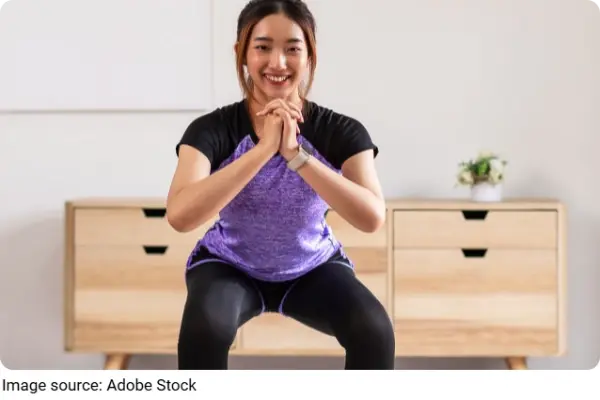
Squats are among the most effective home exercises because they engage multiple muscle groups simultaneously. The movement primarily targets the thighs and glutes while also challenging the core for balance and control. A proper squat begins with feet positioned slightly wider than hip-width apart. The hips move backward while the knees bend, lowering the body as if sitting into a chair. The chest remains upright and the heels stay in contact with the floor throughout the movement.
Beyond developing strength, squats help improve movement efficiency during everyday activities such as climbing stairs, lifting objects, and standing from seated positions. Performing three sets of 12 to 15 repetitions can create a solid foundation for lower-body conditioning.
2. Push-Ups: A Complete Upper-Body Challenge
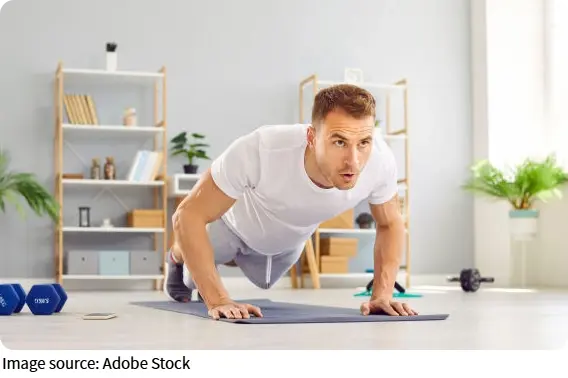
Push-ups remain one of the most respected body-weight exercises due to their ability to strengthen multiple areas simultaneously. The chest, shoulders, triceps, and core all contribute to executing the movement effectively. Maintaining a straight line from head to heels is essential for proper technique. Lowering the body in a controlled manner before pushing back to the starting position increases muscular engagement and reduces unnecessary strain.
Beginners can modify the exercise by placing the knees on the floor, while more advanced individuals may increase difficulty through slower repetitions or elevated foot positions. Regular practice improves upper-body endurance and contributes to better posture.
3. Planks: Strengthening the Core Through Stability
Unlike dynamic movements, planks emphasize stability and endurance. This exercise requires maintaining a fixed position while the abdominal region, lower back, shoulders, and hips work together to keep the body aligned. A forearm plank starts with elbows positioned directly beneath the shoulders. The body forms a straight line while the abdominal muscles remain engaged. Avoiding sagging hips or excessive arching is crucial for effectiveness.
Holding a plank for 20 to 60 seconds develops muscular endurance that supports balance and body control. As endurance improves, longer durations or side plank variations can increase the challenge.
4. Jumping Jacks: A Simple Cardiovascular Booster
Jumping jacks are often associated with warm-ups, but they can also serve as an effective cardiovascular exercise. This movement elevates heart rate quickly, making it valuable for improving aerobic fitness within a limited space. The exercise involves simultaneously jumping the feet outward while raising the arms overhead, then returning to the starting position. Continuous repetitions encourage circulation and increase calorie expenditure.
One advantage of jumping jacks is accessibility. They require no equipment and can be easily incorporated into interval workouts. Performing them for 30 to 60 seconds between strength exercises creates a balanced training session.
5. Lunges: Enhancing Balance and Functional Strength
Lunges train each leg independently, making them particularly useful for improving balance, coordination, and lower-body strength. The exercise also challenges stabilizing muscles that are sometimes underutilized during bilateral movements. Stepping forward and lowering the body until both knees form roughly right angles allows the front leg to absorb most of the workload. Maintaining an upright torso helps ensure proper alignment throughout the movement.
Alternating between legs for 10 to 12 repetitions per side can strengthen the thighs and glutes while enhancing movement control. Reverse lunges may provide an easier option for individuals seeking greater stability.
6. Mountain Climbers: Combining Strength and Cardio
Mountain climbers deliver a unique combination of cardiovascular conditioning and muscular engagement. Starting from a high plank position, the knees move alternately toward the chest in a rapid but controlled rhythm. This exercise activates the shoulders, core, and lower body while simultaneously increasing heart rate. The continuous movement demands coordination and endurance, making it a highly efficient choice for home workouts.
Short intervals of 20 to 40 seconds can significantly increase workout intensity. When performed with proper form, mountain climbers contribute to overall fitness without requiring specialized equipment.
Home-based exercise can be both practical and highly effective when built around proven movements. Squats strengthen the lower body, push-ups develop upper-body power, planks improve stability, jumping jacks enhance cardiovascular fitness, lunges support balance, and mountain climbers combine strength with endurance training. The greatest advantage of these exercises lies in their accessibility. No elaborate setup is necessary, yet consistent practice can produce meaningful improvements in physical performance and daily mobility.