Safe Stretching for Kids

Chandan Singh
| 25-08-2026
 · News team
Stretching can be a useful part of a child’s physical activity routine when exercises are appropriate for the child’s age, abilities, and activity level.
Gentle stretching allows children to explore a comfortable range of motion while developing greater awareness of how their bodies move.
The goal is not maximum flexibility but controlled, comfortable movement that fits naturally into an active lifestyle.
Begin With Light Movement
Before vigorous physical activity, children can spend several minutes walking, marching, or performing gentle arm movements. This provides a gradual transition from rest to more active movement and prepares the body for exercise.
Keep Stretching Comfortable
Children should move gradually into each stretch without bouncing, jerking, or forcing a position. A comfortable stretch may create mild tightness, but it should not cause pain.
The American Academy of Pediatrics states: “In most stretching exercises, your child should stretch to a position where they begin to feel tightness but not pain, then hold steady for 20 to 30 seconds before relaxing.”
If a stretch causes pain, numbness, tingling, or significant discomfort, the child should stop the movement.
Try a Seated Leg Stretch
Have the child sit comfortably with one leg extended and the other leg bent. Keeping the back comfortably upright, slowly reach toward the extended leg without forcing the hands toward the toes. Hold the position briefly, return to the starting position, and repeat on the opposite side.
The movement should remain within a comfortable range rather than being used to achieve maximum reach.
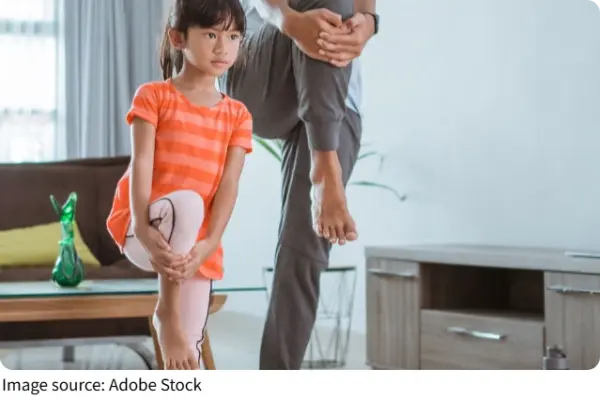
Practice a Standing Calf Stretch
Have the child stand facing a wall with both hands placed against it for support. Position one foot behind the other while keeping the back heel on the floor. Slowly bend the front knee while maintaining a comfortable position in the back leg. Return to the starting position and switch sides.
The movement should remain steady, without bouncing or forceful pressure.
Add a Gentle Shoulder Stretch
Bring one arm across the chest and use the opposite arm to provide light support. Keep the shoulders relaxed and avoid pulling the arm forcefully. Hold the position comfortably, then release and repeat on the other side.
Include a Simple Side Stretch
Stand with the feet comfortably apart and raise one arm overhead. Slowly lean toward the opposite side while keeping the movement controlled. Return to an upright position and repeat on the other side.
The movement should remain gentle and should not involve forcing the torso beyond a comfortable range.
Focus on Technique, Not Flexibility
Children naturally have different levels of flexibility. They do not need to touch their toes, reach a specific position, or match another child’s range of motion. Good technique and comfortable movement are more important than stretching farther.
A parent or caregiver can demonstrate each exercise and encourage controlled technique while allowing the child to determine how far the movement feels comfortable.
Choose the Right Time
Dynamic movements are generally appropriate when preparing for vigorous physical activity, while comfortable static stretches can be included after activity or as part of a separate flexibility routine.
Stretching should complement active play, exercise, and age-appropriate sports rather than replace them.
Consider Individual Needs
Children who have an injury, persistent pain, a condition affecting movement, or difficulty performing a particular exercise may benefit from individualized guidance from a qualified healthcare professional. Exercises can then be selected or modified according to the child’s specific needs.

Safe stretching for children should be simple, controlled, and comfortable. Basic exercises for the legs, calves, shoulders, and sides of the body can introduce children to healthy movement habits without making flexibility the primary goal. By emphasizing appropriate technique and respecting each child’s individual abilities, stretching can become a practical part of an active routine.