Children’s Eye Exams

Chris Isidore
| 27-08-2026
 · News team
Clear vision supports childhood development, learning, and everyday activities. Some eye conditions produce noticeable symptoms, while others may be difficult to recognize.
Age-appropriate vision screening helps identify potential concerns early and determines when further assessment is appropriate.
Why Children’s Eye Exams Matter
Young children may not realize that their vision is blurred or that one eye sees differently from the other. They may also have difficulty describing problems with focusing or visual comfort.
Conditions such as amblyopia and eye misalignment can interfere with normal visual development when they are not identified and appropriately managed. As the American Academy of Ophthalmology explains, “Routine vision screenings are essential for children's development.” Regular screening can therefore help identify potential problems at an appropriate stage and determine whether further evaluation is needed.
When Should a Child Have an Eye Check?
Vision assessment begins in infancy. Early checks can identify visible abnormalities and assess features such as eye alignment, pupil responses, eye movement, and visual behavior.
As children grow, screening methods are adapted to their age and ability to participate. Instrument-based screening can be used in young children, while visual-acuity testing becomes practical when a child can respond reliably to age-appropriate symbols, pictures, or letters.
Screening continues throughout childhood according to clinical recommendations and individual risk factors. A child who does not pass a screening should receive appropriate follow-up rather than simply waiting for the next routine check.
What Happens During the Examination?
The process depends on the child’s age and the purpose of the visit.
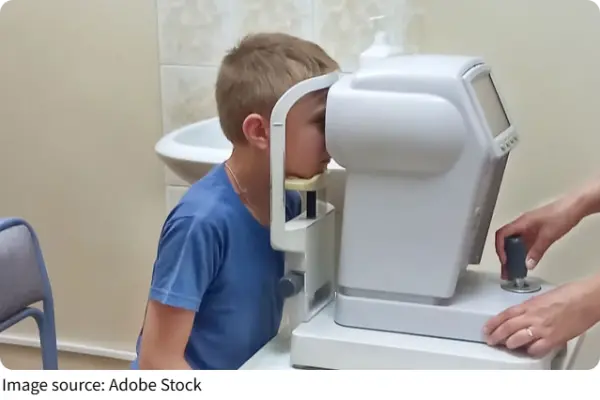
Screening may involve identifying pictures, symbols, or letters from a set distance. Some instruments assess visual risk factors using cameras or other measurements and require little verbal participation.
A comprehensive examination provides a more detailed assessment. It may include visual acuity, eye alignment, focusing ability, eye movement, and examination of internal eye structures. Dilating drops may sometimes be used to allow a more complete evaluation and help determine whether corrective lenses, monitoring, or other treatment is appropriate.
Screening identifies children who may need further assessment; it does not replace a comprehensive eye examination when one is indicated.
Signs a Child May Need Glasses
Children do not always report blurred vision. Parents may instead notice changes in visual habits, including:
- Frequent squinting
- Sitting unusually close to books or screens
- Holding reading material very close
- Difficulty seeing distant objects
- Headaches during visually demanding activities
- Difficulty completing visually demanding tasks
- Tilting or turning the head to see clearly
- Closing one eye when focusing
- Frequent eye rubbing
- Complaints of blurred or uncomfortable vision
These signs do not automatically mean a child needs glasses. Persistent or recurring changes should be discussed with an eye-care professional.
Eye Changes That Need Assessment
Some findings deserve professional attention even when a child does not report vision problems. These include persistent eye misalignment, an unusual pupil appearance, rapid involuntary eye movements, ongoing redness, eye pain, excessive tearing, unusual sensitivity to light, or drooping eyelids.
For infants, difficulty tracking objects or persistent eye crossing or drifting beyond the expected early developmental period should also be evaluated.
Vision and Learning
Clear vision helps children perform visually demanding tasks such as reading, writing, recognizing objects, and following information in the classroom. Uncorrected refractive errors can affect a child’s ability to perform these activities comfortably and effectively.
However, school difficulties should not automatically be attributed to eyesight. Learning, development, attention, sleep, hearing, and other factors can also affect performance. A proper assessment can help determine whether vision is contributing to the difficulty.
Preparing for an Eye Appointment
Parents can help by explaining that the appointment involves simple activities to check how the eyes work. Depending on age, a child may be asked to identify pictures or letters, follow objects, or look at lights.
Before the appointment, parents should mention noticeable changes in vision, previous screening results, family history of childhood eye problems, and concerns raised by healthcare or education professionals.
Supporting Healthy Vision
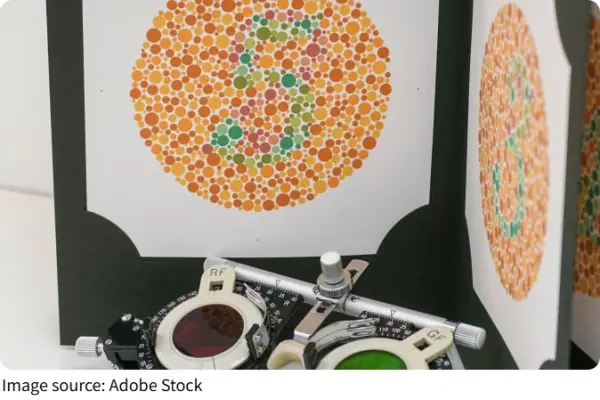
Routine screening can identify vision concerns that may not be obvious at home. When screening or symptoms suggest a possible problem, professional assessment can determine whether a child needs glasses, monitoring, treatment, or additional care.
Following age-appropriate screening recommendations and arranging evaluation when concerns arise can support healthy visual development and help children see clearly as they grow.