Physical Therapy for Seniors

Naveen Kumar
| 16-09-2026
 · News team
Physical therapy can help older people maintain physical function, mobility, and independence.
Rehabilitation may be appropriate when changes in strength, balance, walking ability, or movement affect everyday function, including recovery following illness or injury.
Treatment begins with a comprehensive assessment of walking, strength, balance, joint movement, coordination, and functional performance. Based on these findings, a physical therapist develops a program that may include gait training, balance exercises, progressive strengthening, mobility work, functional practice, and fall-prevention strategies.
Gait Training
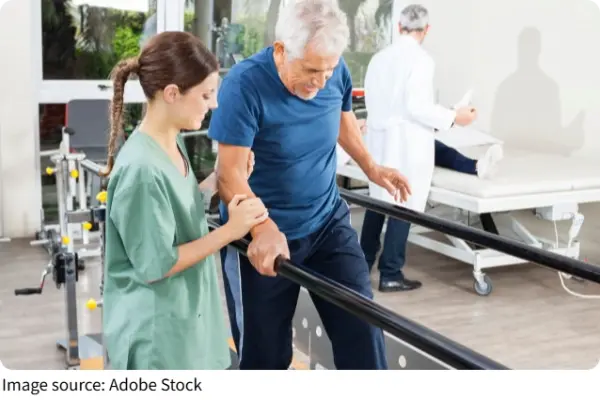
Gait training focuses on improving walking quality, coordination, and control. A physical therapist may evaluate walking speed, step length, foot placement, posture, turning, and changes in direction.
Training can include repeated walking practice, controlled starts and stops, stepping patterns, directional changes, and movement across different surfaces. When necessary, the therapist can assess whether an assistive device, such as a cane or walker, is appropriate and provide instruction in its correct use.
The aim is to establish a stable and efficient walking pattern suited to the person's functional needs.
Balance Rehabilitation
Balance relies on the interaction of strength, vision, body awareness, coordination, and nervous-system function. Rehabilitation can target these components through structured exercises that match the person's current capabilities.
Activities may include:
- Weight shifting
- Controlled reaching while standing
- Multidirectional stepping
- Narrow-stance exercises
- Turning practice
- Sit-to-stand movements
- Standing exercises with appropriate support
Exercise difficulty can be increased gradually as postural control and coordination improve.
Strength Training
Strength in the legs, hips, and trunk contributes to essential movements such as standing, walking, climbing steps, and transferring between surfaces.
A strengthening program may use sit-to-stand movements, supported squats, step-ups, and resistance exercises. Training variables such as resistance, repetitions, movement speed, and exercise complexity can be adjusted according to ability and rehabilitation goals.
Progressive resistance training provides a foundation for improved physical capacity and functional performance.
Fall Prevention
Fall prevention combines physical assessment with targeted movement training. A physical therapist can examine factors such as balance, lower-body strength, walking control, turning, transfers, and stepping ability.
The World Health Organization recommends that older people include varied physical activity emphasizing functional balance and strength training to enhance functional capacity and prevent falls.
“As part of their weekly physical activity, older adults should do varied multicomponent physical activity that emphasizes functional balance and strength training at moderate or greater intensity, on 3 or more days a week, to enhance functional capacity and to prevent falls.”
Training may include balance-reaction exercises, stepping drills, strengthening, walking practice, and strategies for negotiating obstacles or changes in direction. Appropriate assistive equipment can also be assessed and fitted when required.
Rather than relying on one exercise, an effective program addresses the specific factors affecting an individual's stability and movement.
Functional Mobility
Functional mobility training focuses on movements that have direct relevance to everyday life. Therapy may involve rising from a chair, getting in and out of bed, climbing steps, moving through narrow spaces, and changing direction while walking.
Practicing these movements allows the therapist to refine movement technique and introduce appropriate strategies. Activities can become progressively more challenging as physical control improves.
The emphasis is on translating rehabilitation gains into practical movement skills.
Flexibility and Joint Mobility
Joint mobility and flexibility contribute to efficient movement. Restrictions may affect walking, transfers, reaching, or other functional tasks.
Depending on individual requirements, treatment can include gentle stretching, active range-of-motion exercises, and controlled mobility movements. These techniques can complement strength and balance training while supporting comfortable movement.
Exercises should be selected according to the person's physical condition and functional objectives.
Personalized Rehabilitation
Effective rehabilitation should be based on an individual's assessment rather than a standard exercise routine. The treatment plan can reflect mobility level, physical capacity, functional goals, relevant medical considerations, and response to exercise.
Therapy may progress from basic movements to more demanding tasks as strength, coordination, and control develop. Progress can be monitored through measures such as walking performance, balance, transfers, strength, and functional task completion.
A suitable home exercise program can extend rehabilitation beyond supervised sessions and encourage consistent practice.
When Professional Assessment Is Important
A notable change in walking, balance, strength, or mobility warrants assessment by a healthcare professional. Physical therapy may be incorporated into rehabilitation when appropriate, depending on the underlying cause and overall health status.
Sudden changes in movement or mobility may require prompt medical evaluation, particularly when other concerning symptoms are present. A healthcare professional can determine the appropriate course of assessment and whether physical therapy is suitable.
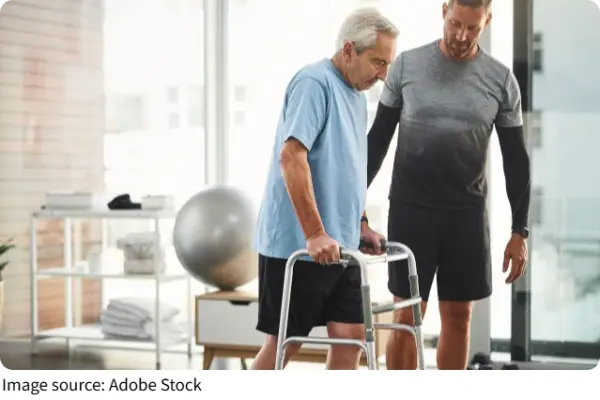
Physical therapy provides a structured way to support mobility and functional independence in older people. Gait training, balance rehabilitation, progressive strengthening, functional practice, and mobility exercises can be integrated according to individual requirements.
A high-quality rehabilitation program emphasizes appropriate assessment, measurable goals, progressive training, and safe technique. Through consistent participation and professional guidance, older people can develop stronger movement skills and greater confidence in everyday mobility.