Hiking for Better Fitness

Pardeep Singh
| 23-09-2026
 · News team
Hiking combines walking with varied terrain and elevation, creating a versatile form of physical activity.
Depending on the route, it can challenge the cardiovascular system, engage the lower body, and require greater control than walking on level ground.
Selecting a route that matches your current ability and increasing the challenge gradually can help make hiking a sustainable part of a regular fitness routine.
Build Aerobic Fitness
Hiking can provide aerobic exercise, with intensity influenced by pace, elevation, distance, and terrain. Uphill sections generally require more effort, while flatter paths allow a steadier rhythm.
“Hiking is one of the best ways to get exercise.” — U.S. National Park Service.
For people aged 18 and over, health guidance recommends at least 150 minutes of moderate-intensity aerobic activity each week, together with muscle-strengthening activities on at least two days. Hiking can contribute to the aerobic portion when performed at an appropriate intensity.
Strengthen the Lower Body
Inclines increase the workload on the legs and hips, while changing terrain requires repeated adjustments in movement. These demands can make hiking more physically varied than walking on a flat surface.
Gradual climbs can provide additional challenge without requiring specialized equipment. Starting with modest elevation and progressing over time allows the activity to remain manageable.
Improve Balance and Coordination
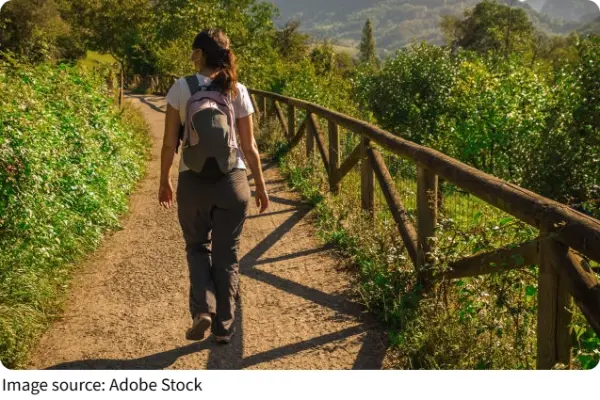
Trail surfaces can vary in texture, direction, and elevation. Walking across these changes requires controlled foot placement and ongoing adjustments in body position.
A manageable route provides an opportunity to practice these movement skills while maintaining a comfortable level of effort.
Select the Right Trail
The most suitable route depends on fitness level, experience, available time, and trail conditions. A shorter path with modest elevation can be a practical starting point.
Before setting out, consider:
- Distance and estimated duration
- Elevation and steep sections
- Trail surface and conditions
- Weather forecast
- Water availability
- Rest opportunities
- Navigation information
Choosing an appropriate route helps keep the activity comfortable and achievable.
Prepare for the Hike
Supportive footwear with suitable grip can improve comfort on changing surfaces. Clothing should allow free movement and suit the expected conditions.
Bring enough water for the planned activity, considering its duration, temperature, and physical effort. A few minutes of gentle movement before walking can help prepare the body for exercise.
During the hike, adjust your pace to the terrain and pause when needed.
People with ongoing health conditions or specific physical needs may benefit from individualized guidance from a qualified health professional when choosing appropriate activity levels.
Increase Activity Gradually
Progress does not require making every hike longer or more demanding. If hiking is new to you, begin with shorter sessions and manageable terrain.
As the route becomes more comfortable, increase one factor at a time, such as walking duration, distance, or elevation. This creates a practical progression while allowing the body to adapt to greater activity.
Make Hiking a Regular Habit
Hiking can complement other forms of physical activity throughout the week. Shorter routes can fit into busy schedules, while longer outings can provide extended periods of aerobic activity.
Varying terrain and route length can also add variety to a fitness routine. Regular movement can support cardiovascular health, physical function, sleep quality, and overall well-being.

Hiking brings together aerobic exercise, lower-body movement, balance, and endurance in an adaptable outdoor activity. Choosing a suitable trail, preparing for the conditions, and progressing at a comfortable pace can help make it a lasting part of a healthy fitness routine.
With consistency, hiking can provide meaningful physical activity while making time outdoors part of everyday life.