Climbing for Better Fitness

Arjun
| 30-09-2026
 · News team
Climbing combines physical movement with balance, coordination, muscular effort, and concentration.
Whether practiced indoors or through appropriately supervised outdoor activity, it can engage multiple areas of the body while providing an enjoyable way to stay active.
For beginners, starting at a suitable level and developing skills gradually can make climbing easier to incorporate into a regular fitness routine.
A Full-Body Form of Exercise
Climbing involves the arms, legs, back, and core through movements such as reaching, pushing, maintaining body position, and controlling each step. These movements can contribute to overall physical conditioning and muscular development.
Climbing can also complement walking, cycling, swimming, strength exercises, and other activities, creating variety within a balanced exercise routine.
Supports Balance and Coordination
Careful foot placement and controlled movement are important parts of climbing. Moving between holds requires coordination between the eyes, hands, feet, and trunk while maintaining body control.
These demands can encourage body awareness and movement skills. Beginners can benefit from concentrating on precise, controlled movements rather than trying to move quickly.
Builds Muscular Endurance
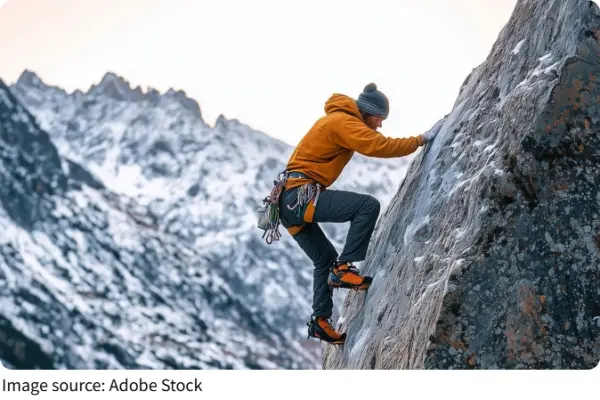
Climbing can challenge muscles through repeated reaching, gripping, positioning, and movement. Holding a position and continuing along a route can place sustained demands on both the upper and lower body.
The level of effort depends on factors such as route difficulty, climbing style, duration, and individual fitness. Beginning with manageable routes provides an opportunity to develop endurance before increasing the challenge.
Encourages Mental Focus
Climbing involves more than physical movement. Planning the next step, identifying suitable holds, and adjusting body position require attention throughout a route.
This combination of physical activity and concentration can make climbing an engaging addition to an active lifestyle. The World Health Organization states, “Regular physical activity provides significant physical and mental health benefits.”
Start at a Suitable Level
New climbers should begin with routes that match their current abilities and take time to learn basic movement techniques and equipment use.
Increasing activity gradually allows the body to adjust to new demands. A qualified instructor can provide structured guidance on climbing techniques and appropriate equipment use, particularly for beginners.
Prepare Before Climbing
A gradual warm-up can prepare the body for climbing by moving gently through the major areas that will be used during the activity. The warm-up should progress naturally toward the movements required for the session.
After climbing, adequate recovery, hydration, nutritious meals, and sufficient rest can support continued participation in physical activity.
Build a Balanced Fitness Routine
Climbing can form one part of a broader weekly activity plan. Combining different forms of exercise can provide variety and involve different movement patterns.
For general health, recommended activity levels include 150–300 minutes of moderate-intensity aerobic activity each week, or 75–150 minutes of vigorous-intensity activity, along with muscle-strengthening activities on at least two days.
The weekly amount can be divided into manageable sessions based on individual schedules, abilities, and preferences.
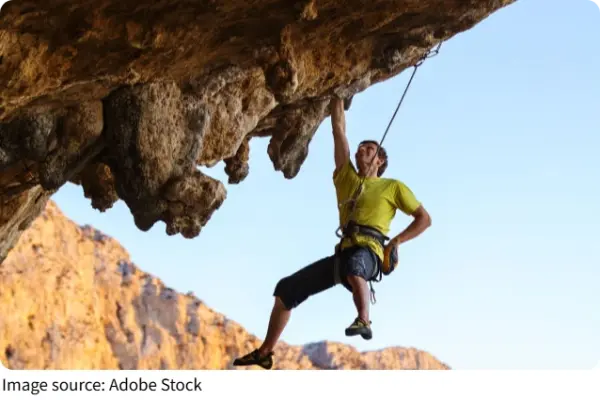
Climbing offers a dynamic way to develop physical fitness while practicing balance, coordination, muscular endurance, and concentration. Choosing an appropriate level, learning sound techniques, and progressing gradually can support a consistent and enjoyable routine.
With suitable preparation, instruction, equipment, and recovery, climbing can be a valuable part of an active lifestyle and a well-rounded approach to fitness.