Mindful Sleep Breathing

Samir
| 30-09-2026
 · News team
When the day finally becomes quiet, the mind does not always follow. Thoughts about work, plans, conversations, or tomorrow can keep attention active when the body is ready for rest.
Mindful breathing offers a simple way to shift attention toward the present moment and create a calmer bedtime routine.
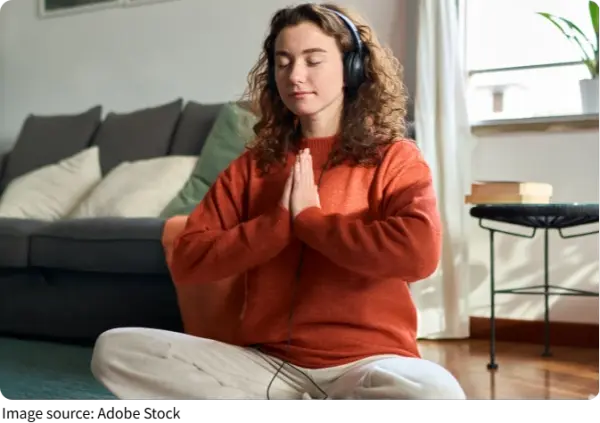
How Mindful Breathing Relates to Sleep
Mindful breathing combines two simple actions: noticing the breath and gently bringing attention back whenever the mind wanders. Unlike exercises that require a special skill, it can be practiced while lying comfortably in bed.
Relaxation techniques often use breathing and focused attention to encourage the body's natural relaxation response. This may include slower breathing and a lower heart rate. Research on mindfulness and sleep is encouraging but not conclusive. Studies have found that mindfulness practices may improve perceived sleep quality for some people, although they should not be viewed as a guaranteed solution for sleep problems.
A Simple Five-Minute Practice
You do not need to force yourself to take unusually deep breaths. The goal is to notice natural breathing and allow the body to settle. Start by lying in a comfortable position. Let your hands rest naturally, close your eyes if that feels comfortable, and bring your attention to one physical sensation, such as air moving through the nose or the gentle movement of the abdomen.
Continue breathing at a comfortable pace. When thoughts appear, there is no need to fight them or criticize yourself. Simply notice that your attention has wandered and gently return it to the next breath.
This cycle of noticing and returning is the central part of the practice. You may repeat it for five minutes or continue until you naturally become sleepy. If concentrating on the breath makes you uncomfortable, you can instead notice the feeling of your body resting against the bed or listen quietly to ordinary sounds around you.

Keep the Breathing Comfortable
A common mistake is trying too hard to make the exercise work. Holding the breath for long periods or repeatedly taking very large breaths is not necessary for mindful breathing. Some popular breathing routines use fixed counts, such as a shorter inhalation followed by a longer exhalation. These can be used as relaxation exercises if they feel comfortable, but there is no need to follow a particular counting pattern to practice mindfulness.
The evidence surrounding slow breathing and sleep continues to develop, so it is more accurate to view bedtime breathing as a relaxation practice rather than a guaranteed treatment for insomnia. It is also normal for the mind to remain active. The aim is not to achieve a completely empty mind. Trying to eliminate every thought can create another task to worry about.
Make It Part of Your Night
Consistency can make the practice easier. Instead of waiting until you are already struggling to fall asleep, try connecting mindful breathing with an existing bedtime routine. For example, you might finish washing up, lower the lights, put away stimulating activities, get into bed, and spend a few quiet minutes noticing your breathing. Over time, this repeated sequence can become a familiar signal that the day is winding down.
A calm sleep environment can support the same goal. Keeping the bedroom quiet, cool, and dark can help create conditions that are suitable for sleep, while maintaining a consistent sleep schedule is also an important part of healthy sleep habits. If you occasionally fall asleep before finishing the exercise, there is no need to start again. The purpose is to relax, not to complete a perfect routine.
When More Help May Be Needed
Mindful breathing can be a useful addition to a bedtime routine, but persistent sleep problems deserve more attention. For chronic insomnia, cognitive behavioral therapy for insomnia, commonly called CBT-I, is an established treatment option. Relaxation techniques may also be included as part of a broader approach.
If sleep difficulties continue regularly or begin affecting daytime activities, discussing them with a healthcare professional can help identify possible causes and appropriate treatment.
The Expert Perspective
Dr. Jon Kabat-Zinn, Professor of Medicine Emeritus at the University of Massachusetts Medical School, has spent decades proving that mindfulness is not a mystical state, but a practical retraining of the nervous system.

Final Thoughts
Mindful breathing does not require special equipment, a complicated schedule, or a completely quiet mind. A few comfortable minutes of paying attention to each breath can give the evening a calmer transition and may support better sleep quality for some people. The most useful approach is gentle and realistic: breathe naturally, notice when the mind wanders, return to the present, and let sleep arrive without forcing it.
Breathing Exercises to Relax or Fall Asleep Fast | 478 Mindfulness Breathing | TAKE A DEEP BREATH
Video by Mike Maher | TAKE A DEEP BREATH