Mindful Living Habits

Elise
| 30-10-2026
 · News team
Modern life often leaves us with busy schedules, constant distractions, and many things to think about. Finding time to slow down can make a difference in how we feel throughout the day.
Meditation offers a simple way to pause, focus on the present, and become more aware of our thoughts and feelings. It does not require special equipment or complicated skills. With a quiet place and a few minutes of patience, we can begin developing this relaxing habit.
Understanding the Benefits of Meditation
Meditation involves directing our attention toward something specific, such as breathing or physical sensations. Instead of following every thought, we learn to observe what is happening in the present moment.
One important benefit is relaxation. Sitting comfortably and paying attention to our breathing gives us an opportunity to step away from daily demands. Releasing unnecessary muscle tension can help us feel more comfortable and rested.
Meditation may also help us develop calmer responses to stressful situations. By observing emotions without immediately reacting, we can learn to approach everyday challenges with greater patience.
Another benefit is improved concentration. Meditation encourages us to return our attention to one chosen focus whenever distractions appear. Practicing this regularly can help us become more comfortable with directing our attention during work, reading, and other daily activities.
Developing Greater Self-Awareness
Meditation also gives us an opportunity to understand ourselves better. During a session, we can notice physical sensations, emotional changes, and repeated patterns of thinking.
For example, we may discover that our shoulders become tense when thinking about a busy schedule. Recognizing these responses helps us understand our habits and reactions.
This practice is closely connected with mindfulness, which means paying attention to present experiences without immediately judging them. We do not need to change every thought or feeling. Simply noticing them is a useful starting point.
Choose a Comfortable Environment
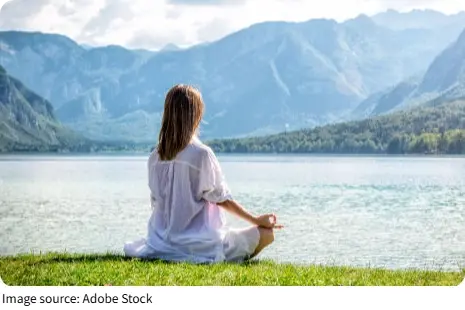
Find a quiet place where interruptions are unlikely. A peaceful corner at home or a comfortable outdoor location can work well.
Reduce background noise and put away unnecessary distractions. The surroundings do not need special decoration. What matters is having a space where you can relax and concentrate.

Find a Relaxed Sitting Position
Choose a position that allows you to remain comfortable. You can sit on a cushion, place both feet on the floor, or use a supportive chair.
Keep your back naturally upright while relaxing your shoulders and neck. Rest your hands comfortably on your legs. There is no need to force your body into an uncomfortable position.
Relax Your Body and Follow Your Breathing
Close your eyes if comfortable, or gently lower your gaze. Begin by noticing how your body feels.
Gradually relax different areas, starting with your face and moving toward your neck, shoulders, back, legs, and feet.
Next, focus on your breathing. Notice the air moving in and out and the gentle movement of your abdomen. There is no need to control every breath. Simply observe its natural rhythm.
Observe Thoughts Without Judging
It is normal for the mind to wander during meditation. You may think about work, upcoming plans, or earlier experiences. This does not mean you are doing anything incorrectly.
Recognize each thought without becoming frustrated, then gently return your attention to breathing.
The purpose is not to empty the mind completely or eliminate emotions. Instead, meditation helps us develop a more balanced relationship with our thoughts and feelings.
Build a Daily Routine
Consistency matters more than session length. Beginners can start with a few minutes and gradually increase the duration as they become comfortable.
A session of 10 to 20 minutes can be a useful goal, although the ideal duration depends on individual preferences and schedules. Morning and evening are both suitable times.
Guided audio sessions and beginner classes can also provide helpful direction when learning basic techniques.
Final Thoughts
Meditation encourages us to slow down, notice our experiences, and give our attention a clear direction. Progress does not require perfect sessions or immediate results.
With patience and regular practice, we can develop greater self-awareness, support relaxation, and improve concentration. Even a few quiet minutes each day can become a valuable part of a balanced routine.
Benefits Of Meditation - TOP 6 BENEFITS
Video by Improvement Pill