Robots Aid Recovery

Sofia Alvarez
| 30-10-2026
 · News team
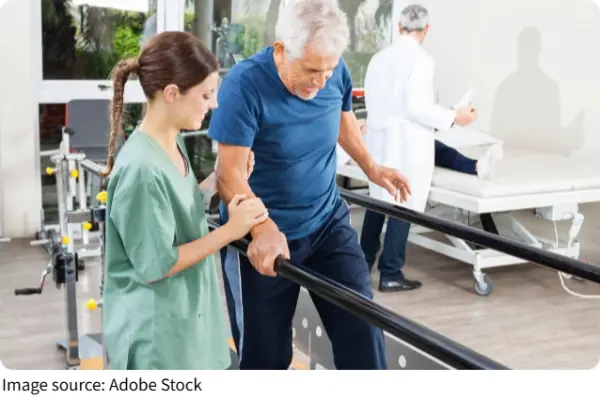
Hospital-based rehabilitation helps patients regain movement and develop the skills needed for everyday activities following a neurological event.
Physiotherapists and occupational therapists design individualized programs to improve arm mobility, coordination, muscle strength, and functional independence.
Robotic-assisted therapy is becoming an additional tool in clinical rehabilitation. A randomized controlled trial involving 72 patients receiving inpatient rehabilitation examined whether robotic devices could improve upper-limb function and complement conventional treatment.
Robotic Assistance in Therapy
Robotic rehabilitation systems guide or support repeated arm movements according to a patient's abilities. This assistance enables patients to practise specific movements under professional supervision, with exercises adapted to their progress and functional needs.
In the clinical trial, participants received either robotic-assisted therapy or conventional rehabilitation alongside their regular treatment. Researchers compared the groups to assess changes in movement, muscle strength, and functional performance.
Patients receiving robotic-assisted therapy completed substantially more exercise repetitions per session. The findings highlight the potential of robotic systems to increase movement practice within hospital rehabilitation programs.
Evaluating Recovery Outcomes
Neurological conditions can affect arm control and mobility, making everyday activities such as dressing, reaching for objects, and personal care more challenging. Rehabilitation teams assess these abilities to establish treatment goals and monitor progress.
The trial found improvements in arm movement, strength, and functional performance in both groups. However, robotic-assisted therapy did not demonstrate significantly greater overall improvements than conventional rehabilitation.
The study's lead author, Casey Cowan, and colleagues reported: “Although RT facilitated a higher number of UE repetitions during therapy, outcomes were similar to conventional therapy.”
The findings highlight a distinction between exercise volume and clinical outcomes. Although robotic systems can help patients practise more movements, the number of repetitions alone does not establish how much functional improvement a patient will achieve.
Personalized Hospital Care
Effective rehabilitation depends on treatment that reflects each patient's abilities, medical needs, and recovery goals. Therapists select suitable exercises, assess movement quality, and adjust the level of assistance as patients progress.
Programs may include supported arm movements, reaching tasks, coordination exercises, and activities designed to improve everyday function. Regular assessment helps clinicians determine which exercises are appropriate and when adjustments are needed.
Robotic equipment can support this process by providing structured movement practice. Professional assessment and individualized treatment planning remain central to rehabilitation, ensuring that technology serves each patient's specific needs.
Integrating Technology Into Recovery
Robotic-assisted systems offer hospitals another way to deliver repetitive movement training. Their potential value lies in expanding exercise opportunities while allowing rehabilitation professionals to maintain oversight of treatment.
Further clinical research can help identify which patients are most likely to benefit from robotic assistance, which treatment approaches are most effective, and how these systems can be integrated into established rehabilitation programs.

Advancing Hospital Rehabilitation
Robotic-assisted therapy offers an additional approach to hospital-based rehabilitation. The clinical trial demonstrated that these systems can increase exercise repetitions, while overall improvements remained comparable to conventional treatment.
Combining appropriate technology with therapist-led care may help hospitals deliver structured, individualized rehabilitation. The ultimate objective is to improve functional ability, support everyday independence, and help each patient make meaningful progress throughout recovery.