Healing Through Rehab!

Julian
| 13-11-2026
 · News team
Surviving a sudden brain attack is only the beginning of a long recovery journey. Many people experience lasting difficulties with movement, speech, balance, swallowing and memory, making rehabilitation an essential part of medical care.
However, a report published in November 2026 has raised concerns about the amount of therapy available to patients across England, Wales and Northern Ireland.
A Significant Shortage of Rehabilitation
The latest audit revealed that the average daily therapy time was approximately 40 minutes, considerably below the three-hour recommendation. The proportion of patients receiving the full amount had also declined from 7.5% in October to December 2024. Rehabilitation support after hospital discharge was another concern. Only 68% of patients continued receiving assistance once they had returned home.
Why Early Rehabilitation Matters
A sudden interruption of blood supply to part of the brain, or bleeding within the brain, can damage cells responsible for essential functions. The effects depend on the location and extent of the injury. Some people experience weakness on one side of the body, while others have difficulty understanding language, speaking clearly or maintaining balance.
Rehabilitation helps the nervous system adapt after injury. The brain has a capacity known as neuroplasticity, which allows surviving networks to reorganize and form new connections. Repeated practice of meaningful activities can strengthen these pathways and support the development of alternative ways to perform everyday tasks.
Recovery does not follow the same timetable for everyone. Some improvements happen during the first weeks and months, while others require continued practice over a longer period. Consistent, appropriately designed therapy can help patients work toward realistic personal goals.
Different Therapies Address Different Needs
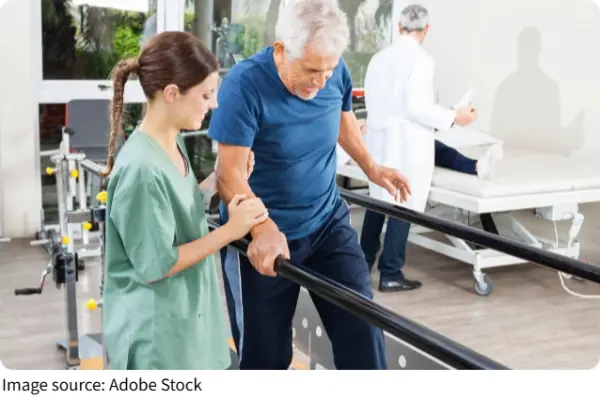
Physiotherapy focuses on movement, strength, coordination and balance. Exercises may involve standing, walking, transferring between a bed and chair, or improving control of an affected arm or leg. Repeated practice helps patients rebuild confidence and perform daily activities more safely.
Occupational therapy concentrates on independence. Therapists help patients practise dressing, preparing meals, bathing and managing household tasks. They may also recommend changes to the home environment or assistive equipment to reduce the risk of falls.
Speech and language therapy supports communication and swallowing difficulties. Treatment can include exercises for speech clarity, language comprehension and safe swallowing techniques. These skills are important for social interaction, nutrition and everyday independence.
Why Rehabilitation Can Be Difficult to Access
The audit figures raise questions about staffing, service capacity and the coordination of care. Rehabilitation requires trained professionals, suitable facilities and enough time for individual treatment. When demand exceeds available resources, patients may receive shorter sessions or experience delays.
Recovery can also be affected by personal circumstances. Some patients become exhausted easily or have additional medical complications that limit participation. Therapy must therefore be adjusted to individual abilities rather than delivered as a fixed routine without considering safety.
A further challenge appears after hospital discharge. Patients may need community-based services, transport assistance or family support to continue practising safely. Without effective coordination, the transition from hospital treatment to home-based recovery can become difficult.
Expert Insight
Juliet Bouverie, criticized the findings in the Guardian's November 2026 report. Commenting on the national audit, she stated: “These damning figures expose the deeply troubling reality.”
What Better Recovery Support Should Include
Effective rehabilitation requires more than simply counting the minutes spent in therapy. Treatment should be personalized, regularly reviewed and focused on activities that matter to each patient. Clear communication between hospital teams, community therapists, patients and family members can help prevent gaps in care.
Family members may also benefit from practical training. Learning safe transfer techniques, communication strategies and ways to support daily exercises can make home recovery more manageable. However, family assistance should complement professional care rather than replace qualified therapists.
The latest UK audit reveals a substantial gap between recommended rehabilitation and the amount of therapy received by many people recovering from a major brain attack. Limited access to physiotherapy, occupational therapy and speech support may make the return to everyday activities more difficult.

Rehabilitation is a long-term process that depends on appropriate treatment, repeated practice and coordinated support. Improving access to professional services, both in hospitals and after discharge, could help more survivors regain independence and maintain a better quality of life.